Artist Statement
My practice centres on stories that resist easy resolution and demand care in how they are held and shared. Through interdisciplinary, research-based work informed by a Global Majority perspective, I explore the entanglements of memory, identity, migration, and colonial legacies. I am interested in what emerges when we stay with uncertainty, allowing instinct, imagination, and vulnerability to become ways of knowing. I think of this as a process of worlding: creating real and imagined conditions where alternative futures and new ways of relating can emerge.
Materials are both method and meaning. Earthenware ceramics ground my practice in the physical and the ancestral. Sisal reconnects me to my Kamba heritage while tracing the intertwined histories of colonial plantations and precolonial knowledge systems. I manipulate photography, distorting and rearranging archives to create digital collages that move across temporalities, disrupting linear histories and opening dialogues between memory, absence, and possibility. Together, these materials shape an expanded sculptural and narrative language.
Across my work, I examine cultural inheritance, displacement, and belonging, asking how histories continue to inhabit the present. I am drawn to subjects that are difficult to witness, continually questioning my responsibilities as a storyteller and the ethical relationship between artwork, history, and audience. Rather than offering resolution, I seek to create encounters that invite reflection, participation, and transformation, making room for more generous ways of remembering, relating, and repairing.
I am an interdisciplinary artist whose practice spans performance, installation, photography, video, drawing, sound, and sculpture. Born in Nairobi, I trained at the School of the Art Institute of Chicago and completed an MFA through the Transart Institute in 2020. Over the years, my practice has moved fluidly between exhibition-making, research, pedagogy, and institutional collaboration.
What defines my work is its refusal to be confined to a single medium or stable category. Instead, my practice is a sustained inquiry into memory, embodiment, the afterlives of colonialism, gendered experience, and the politics of representation. I often combine rigorous research with a deeply physical and spatial approach, creating works that engage performance, installation, and image-making. I return repeatedly to the archive, not as a neutral repository of history, but as a contested site where histories are produced, obscured, and reimagined.
My exhibition history reflects a practice with significant international reach and institutional engagement. I have presented work at the 14th Dakar Biennale, the Venice Biennale, Lisson Gallery, the Nairobi Contemporary Art Institute, the Smithsonian National Museum of African Art, the MARKK Museum Hamburg, the Wellcome Collection, and numerous other institutions and exhibitions across Africa, Europe, and North America. These experiences have allowed me to move between local and transnational conversations while remaining grounded in the specificities of place, memory, and the lived residues of history.
Among the projects that most fully articulate the breadth of my practice are KASPALE, presented at the Nairobi Contemporary Art Institute, and Matter as Actor at Lisson Gallery. Works including Kaspale's Playground, Parts of the Brother's, Parts of the Sister's, Kaspale's Ancestor (i), Kaspale's Archive Intrusion the Vortex III, Rose's Relocation, and Entity Costume demonstrate my ongoing interest in naming, seriality, and fragmentation. Rather than functioning as straightforward illustrations or autobiographical narratives, these works are assembled through repetition, resonance, and relational thinking.
Research has always been central to my practice, and this is reflected in the residencies and fellowships I have undertaken. I have participated in programs at PRAKSIS in Oslo, HIAP in Helsinki, the Smithsonian in Washington, the Delfina Foundation in London, the Max Planck Institute for Empirical Aesthetics in Frankfurt, and other institutions across Africa, Europe, and the Americas. For me, these residencies are not simply professional opportunities; they extend the work itself by creating space for reflection, dialogue, experimentation, and new modes of making.
Teaching and mentorship are equally important aspects of my practice. I have held leadership roles in art education, directed an MFA program, co-founded the process-based residency Untethered Magic, and developed UJUZI, an alternative learning and mentorship platform for East African artists. I see pedagogy as inseparable from my artistic work because it reflects my ongoing commitment to how knowledge is shared, transmitted, and activated across communities and institutions.
My work is represented in several public and private collections, including the Nairobi Contemporary Art Institute Collection, the Nicolas Logsdail Collection, the Devereux Collection, the PLP / Aspire Art Collection, the Sindika Dokolo Foundation, the Kouvola Art Museum Collection, the National Museum Nairobi, and the National Museum Mali. These collections reflect the ways in which my practice has entered broader conversations around contemporary African and diasporic art while circulating within both institutional and private contexts.
Across my career, I have remained interested less in the production of isolated objects than in the relationships between body and archive, material and memory, and history and its ongoing presence. My work asks how colonial and postcolonial structures continue to shape what can be seen, held, performed, and remembered, while proposing art as a space for counter-memory, speculation, and repair. Although my practice participates in broader contemporary conversations around research, embodiment, and institutional critique, it remains rooted in my own sustained engagement with the complexity of lived and inherited histories.
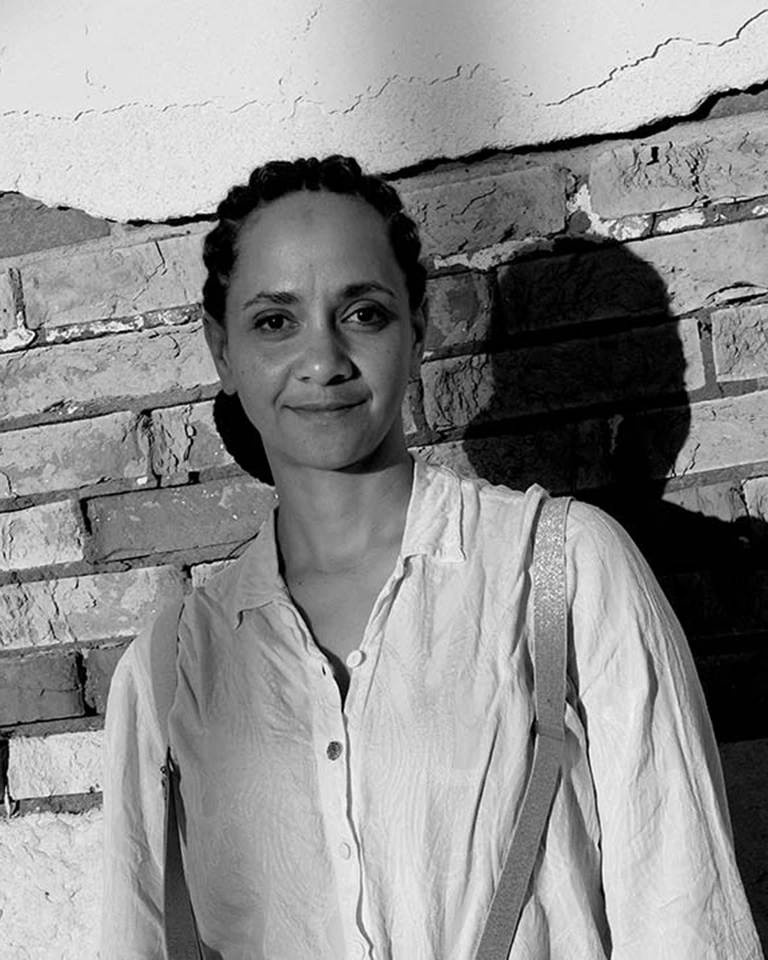
CV
Master in Fine Arts
Plymouth University, Transart Institute, UK
Bachelor in Fine Arts
School of the Art Institute of Chicago, USA
Master in Fine Arts
Plymouth University, Transart Institute, UK
Bachelor in Fine Arts
School of the Art Institute of Chicago, USA
Press & Texts
Exhibitions
- Le Sel NoirStädtische Galerie Villingen-Schwenningen(opens in a new tab)
- WorldingInstitut für Moderne Kunst Nürnberg(opens in a new tab)
- Le Sel NoirStädtische Galerie Bremen(opens in a new tab)
- Decolonial Feminist Ecologies — On Body and LandLahore Biennale Foundation (collateral event)(opens in a new tab)
- Broken Time. And the World is Made Again by What it ForgetsMuseum of Contemporary Art Skopje(opens in a new tab)
- Kaspale: press releaseNairobi Contemporary Art Institute (NCAI)(opens in a new tab)
- Unraveling the (Under-) Development ComplexSAVVY Contemporary(opens in a new tab)
Featured Exhibitions
Interviews
Books
Conferences
Writing
Press
- 'Matter as Actor' at Lisson Gallery: group show reviewThe Arts Desk(opens in a new tab)
- Beziehungsgeflechte: Oliver Hardt on Le Sel NoirTexte zur Kunst(opens in a new tab)
- Kaspale: review of the solo exhibition at NCAIContemporary And (C&)(opens in a new tab)
- A Revolution of the Ordinary: review of The Ordinary Lives of WomenTimes of Malta(opens in a new tab)
Talks & Videos
- 57th AICA International CongressJohannesburg, South Africa(opens in a new tab)
- Extractivism / Activism: Art, Activism and Ecological ExtractionLocating Environmental Justice (YouTube)(opens in a new tab)
- I Have Heard Many Things About YouPerformance (YouTube)(opens in a new tab)
- Family Lunch: Home DeliveryDelfina Foundation (Facebook video)(opens in a new tab)
- Africa Fashion ExpandedV&A + SOAS (YouTube)(opens in a new tab)
- Artist Portrait: Syowia KyambiNairobi Contemporary Art Institute (YouTube)(opens in a new tab)